
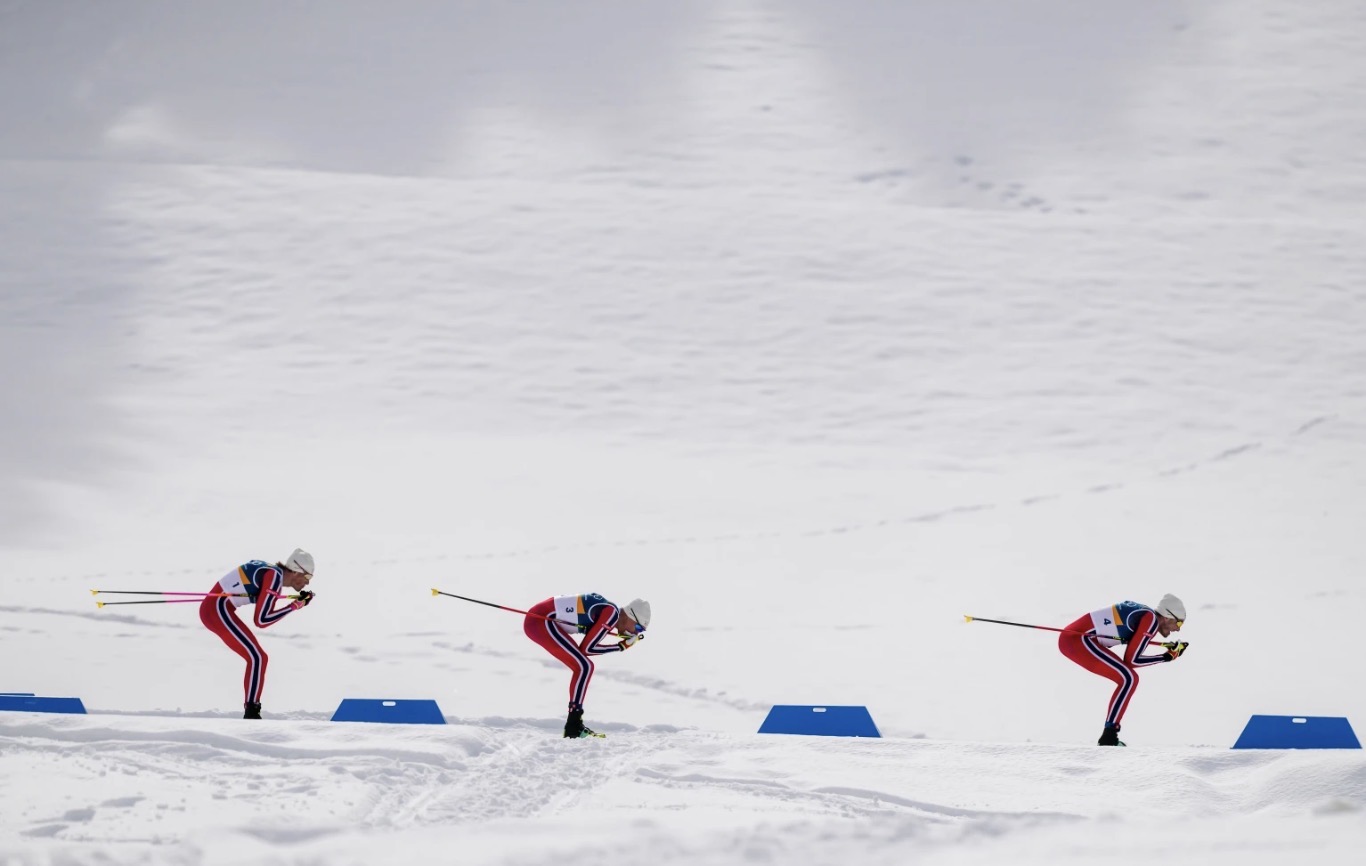
Lessons from Johannes Høsflot Klæbo and the Norwegian Cross-Country Skiing Model
Introduction
The 2026 Winter Olympics in Milano-Cortina provided a clear example of modern endurance performance at the highest level. Johannes Høsflot Klæbo achieved dominant results across multiple events, ranging from sprint races to long-distance competitions.
Such performance cannot be explained by a single physiological parameter. Instead, it reflects the integration of several factors:
aerobic capacity
lactate threshold
movement efficiency
neuromuscular power
tactical execution
These characteristics are not only individual traits but also outcomes of a structured training system. The Norwegian model of cross-country skiing provides a useful framework for understanding how such performance is developed.

Aerobic Capacity and Performance Limits
Maximal oxygen uptake (VO₂max) represents the upper limit of aerobic energy production. Elite cross-country skiers consistently demonstrate some of the highest values reported in endurance sports, often exceeding 80 ml·kg⁻¹·min⁻¹.
The use of both upper and lower body musculature in skiing increases total oxygen demand, contributing to these high values. However, while VO₂max is necessary for elite performance, it is not sufficient to explain differences among top athletes.
At the highest level, performance is more closely related to the fraction of VO₂max that can be sustained over time.
Lactate Threshold and Metabolic Regulation
A key determinant of endurance performance is the intensity at which lactate begins to accumulate rapidly in the blood. This is commonly referred to as the lactate threshold.
In elite athletes, the second lactate threshold typically occurs at blood lactate concentrations around 2–4 mmol·L⁻¹. At this intensity, athletes can sustain a high percentage of VO₂max for prolonged periods.
The Norwegian training model places strong emphasis on this zone. Rather than frequently training at maximal intensity, athletes perform a substantial portion of their quality work near the lactate threshold.
This approach promotes:
increased mitochondrial density
improved oxidative capacity
enhanced lactate clearance
As a result, athletes are able to maintain higher speeds with lower metabolic cost.
Efficiency and Movement Economy
At the elite level, differences in performance are often determined by efficiency rather than capacity.
Efficiency refers to the oxygen cost required to produce a given external workload. In cross-country skiing, this is strongly influenced by technique, coordination, and force application.
Small improvements in movement economy can lead to significant performance gains over long distances. Athletes who expend less energy at submaximal intensities are able to preserve resources for higher-intensity efforts later in the race.
Technical proficiency is therefore not separate from physiology; it directly influences metabolic demand.
Anaerobic Capacity and High-Intensity Efforts
Although cross-country skiing is predominantly aerobic, race outcomes are often determined by short periods of high-intensity work, particularly in:
steep climbs
surges within the pack
final sprint finishes
During these phases, blood lactate concentrations can increase substantially, often exceeding 10 mmol·L⁻¹.
The ability to tolerate and utilize this anaerobic contribution is an important component of performance. However, such efforts are typically brief and strategically timed.
Thus, successful athletes combine:
high aerobic capacity
efficient lactate regulation
the ability to produce power under fatigue
Strength and Power Development
Cross-country skiing requires the coordinated use of upper and lower body musculature. Consequently, strength training plays a central role in performance development.
Strength contributes to:
increased propulsion force
improved mechanical efficiency
reduced relative intensity at submaximal speeds
In particular, upper-body strength is critical for double poling and sprint finishes. Core stability is also essential for effective transfer of force between limbs.
Norwegian athletes integrate strength training throughout the year, with emphasis on:
maximal strength
movement-specific power
stability and coordination
This integration allows athletes to maintain technical efficiency even under conditions of fatigue.
Training Volume and Intensity Distribution
One of the defining characteristics of Norwegian endurance training is the combination of high training volume with controlled intensity.
Elite cross-country skiers typically accumulate:
approximately 800-1000 hours of training per year
The distribution of intensity is strongly skewed toward low-intensity work:
~80-90% low intensity
~10-15% threshold
small proportion of high-intensity training
Low-intensity training supports aerobic development while allowing high total volume. Threshold training provides a strong stimulus for adaptation without excessive fatigue.
This distribution enables consistent training over long periods, which is essential for long-term performance development.
Lactate-Controlled Training
A distinguishing feature of the Norwegian model is the use of lactate measurements to regulate training intensity.
Athletes frequently measure blood lactate during interval sessions to ensure that intensity remains within targeted zones. This allows for precise control of training load.
The benefits of this approach include:
avoidance of excessive anaerobic stress
improved repeatability of sessions
more consistent progression
In contrast to approaches that emphasize maximal effort, this method prioritizes controlled, repeatable work.
Training Camps and Environmental Factors
Training camps are an important component of the Norwegian system. They provide an environment in which athletes can focus on training with minimal external demands.
Camps are used for:
increasing training volume
refining technique
conducting physiological testing
preparing for specific competitions
Altitude camps are also commonly used to stimulate adaptations related to oxygen transport and utilization.
In addition to physiological benefits, camps contribute to the development of training culture and consistency.
Recovery and Adaptation
High training volume requires effective recovery strategies. In the Norwegian model, recovery is treated as an integral part of the training process.
Key elements include:
sufficient sleep
appropriate nutrition
strict control of low-intensity sessions
By minimizing unnecessary fatigue, athletes are able to sustain high training loads over extended periods.
Adaptation is therefore not driven by individual sessions, but by the accumulation of consistent training over time.
Competition Demands and Pacing
Cross-country skiing races involve variable intensity, depending on terrain and tactical dynamics.
Athletes typically experience:
moderate intensity during flat sections
high intensity during climbs
maximal effort during finishing phases
This requires the ability to regulate energy expenditure and respond to changes in pace.
Successful performance depends not only on physiological capacity but also on tactical decision-making, including:
positioning within the group
timing of efforts
energy conservation

Discussion
The performance of athletes such as Johannes Høsflot Klæbo reflects the integration of multiple physiological and technical factors. No single variable determines success.
Instead, performance emerges from the interaction of:
aerobic capacity
lactate threshold
efficiency
strength and power
training consistency
The Norwegian model provides a framework that supports the development of all these components through:
high training volume
controlled intensity
long-term progression
Practical Implications
The principles underlying Norwegian training can be applied across endurance sports.
Key considerations include:
Prioritize low-intensity training to support volume
Perform threshold training at controlled intensity
Develop strength relevant to the sport
Improve movement efficiency and technique
Ensure adequate recovery
Maintain consistency over time
These principles are not sport-specific and can be adapted to disciplines such as running, cycling, and swimming.
Conclusion
Elite endurance performance is not the result of isolated high-intensity efforts. It is the outcome of long-term, structured training characterized by consistency and precision.
The Norwegian model demonstrates that performance can be optimized through:
high-volume aerobic training
careful regulation of intensity
integration of strength and technique
systematic progression over time
Johannes Høsflot Klæbo’s performance at the 2026 Winter Olympics represents an example of how these principles can be applied at the highest level.
References
Sandbakk, Ø., et al. (2016). The physiological capacity of world-class cross-country skiers
Tønnessen, E., et al. (2024). Training session models in endurance sports
Walther, J., et al. (2023). Training characteristics of elite cross-country skiers
Mahood, N.V., et al. Physiological aspects of cross-country skiing
Research on lactate threshold and endurance performance
Leave a Reply